Fellow Portrait
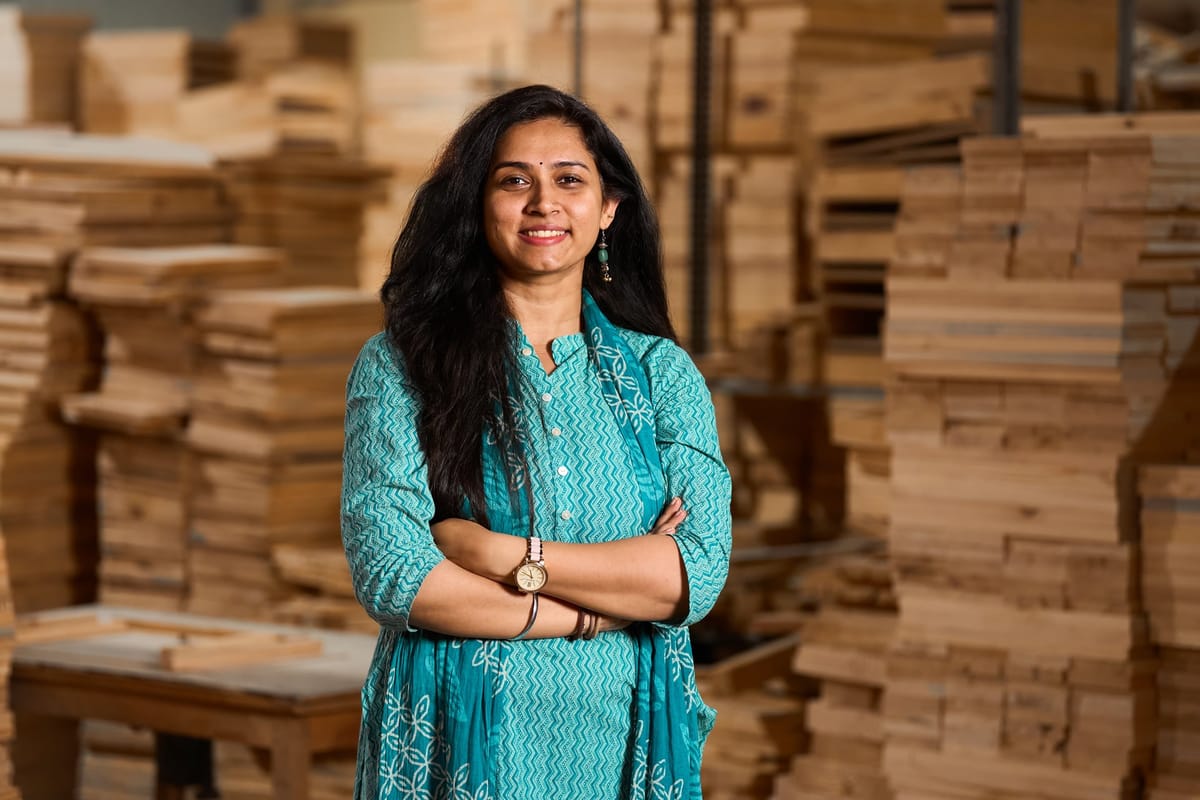
Monika Shukla
Humble Bee

Humble Bee empowers rural women in India through sustainable, tech-enabled beekeeping that boosts incomes while restoring biodiversity and building climate resilience.
.svg?&quality=80&auto=webp&width=200)
South Asia and Central Asia
India
.svg?&quality=80&auto=webp&width=200)
Fellow
2026
Updated March 2026
Economic precarity and fragile harvests trap women smallholder farmers in poverty
Across rural India, millions of landless and smallholder women farmers live on the edge of economic insecurity. Women make up a significant share of the agricultural workforce, yet often lack access to land ownership, training, finance and markets. Moreover, as climate change accelerates, declining soil health and unpredictable weather erode already fragile crop yields, deepening poverty and limiting pathways to stable incomes.
After spending two years immersed in rural communities, searching for sustainable livelihoods that could work at scale without heavy capital or technical barriers, micro-entrepreneurship advocate Monika Shukla settled on a deceptively simple solution: bees.
Why bees? Because, she explains, pollinators sit at the heart of healthy food systems, supporting more than three-quarters of the world’s food crops, according to the United Nations Food and Agriculture Organization. Yet with bee populations in rapid decline, crop yields are suffering, along with farmers’ incomes: “I realized that restoring pollination could restore livelihoods too.”
From that insight, Humble Bee was born: a business that empowers women beekeepers while reviving biodiversity and strengthening rural food systems.
“Beekeeping is a rare solution that is not only nature-positive but also socially and economically empowering: it reinvigorates biodiversity, improves farm yields and creates a dignified source of income.”
A solution that supports women beekeepers from set-up to sales
From the outset, Monika and Humble Bee’s founding team were determined to build a solution rooted in reality, not theory. Together with co-founder and COO Vaibhav Trimukhe, a master trainer in scientific beekeeping, and Chief Strategy Officer Varun Kashyap, the team learned beekeeping themselves. During that time they gained insight into what holds women back — from fragile harvests to unfair pricing.
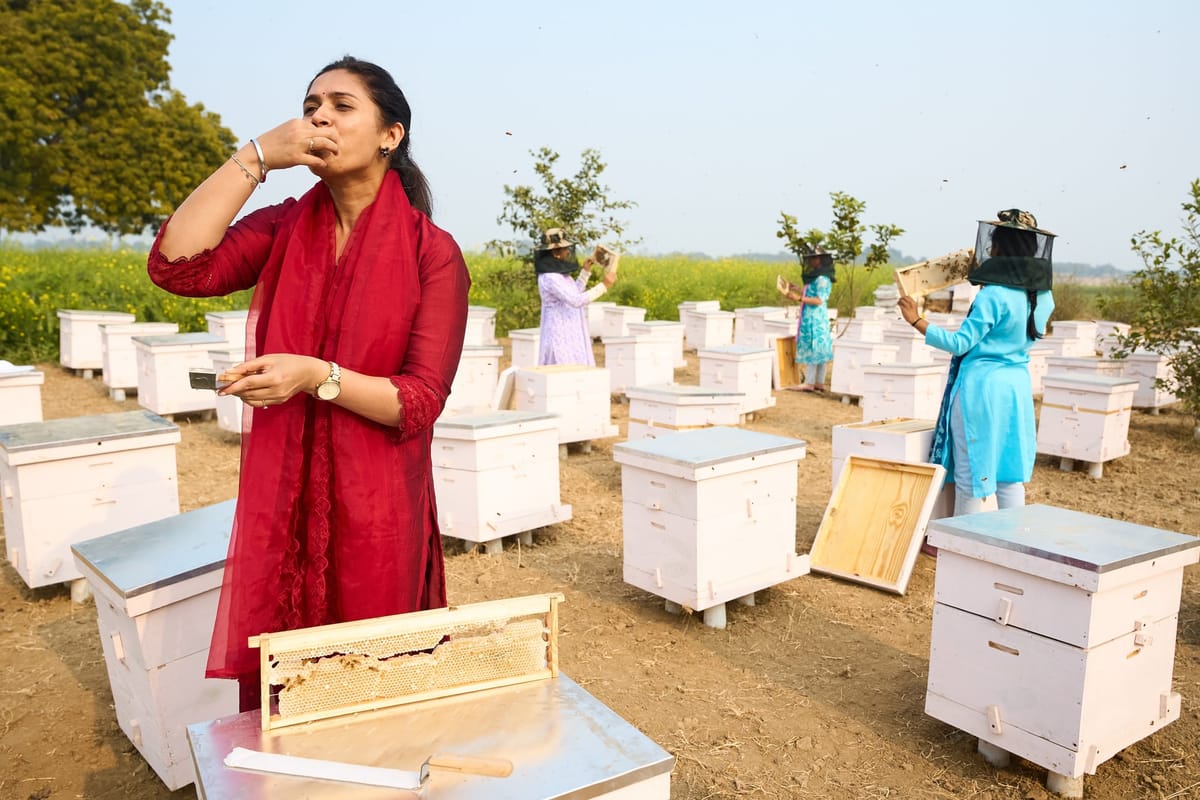
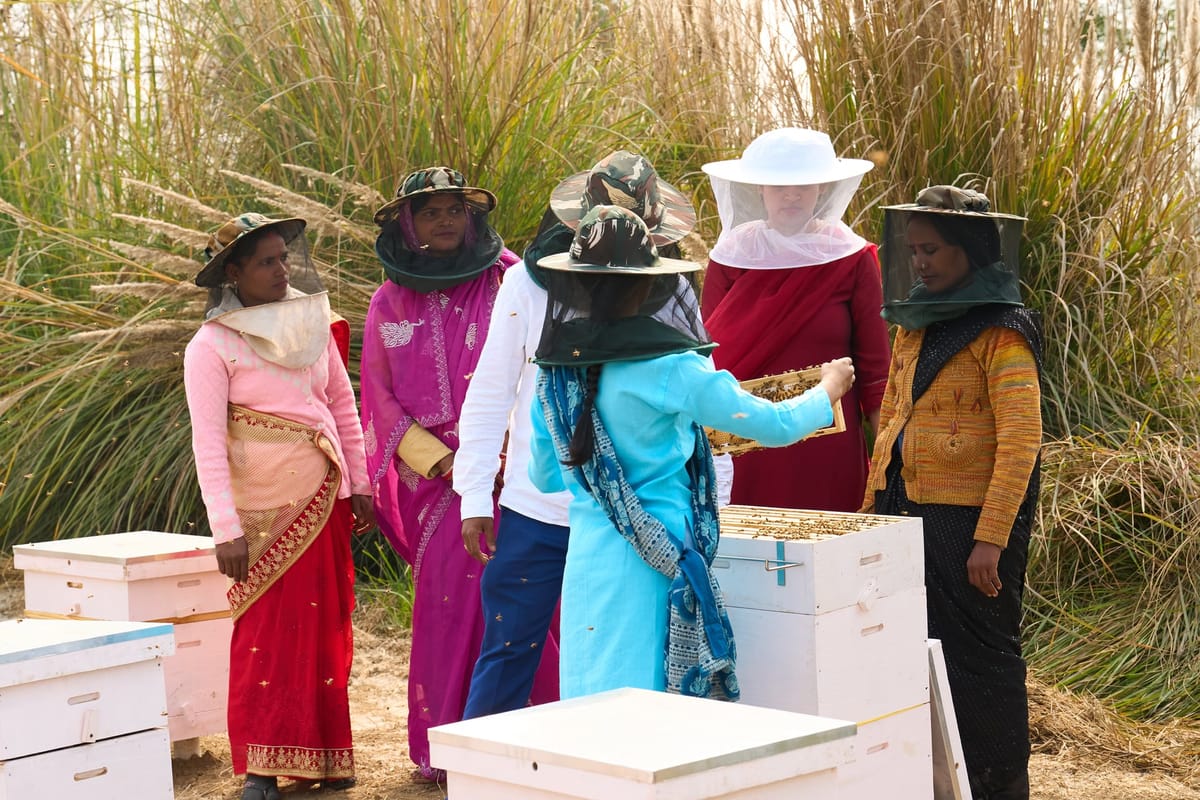
Those lessons shaped Humble Bee’s distinctive approach. Rather than selling honey or equipment alone, Monika built an end-to-end beekeeping system that supports women from their first hive to a fair sale, while cutting out the middlemen who often capture the value. “We hold women’s hands at every stage and ensure their hard work is fairly rewarded,” she says.
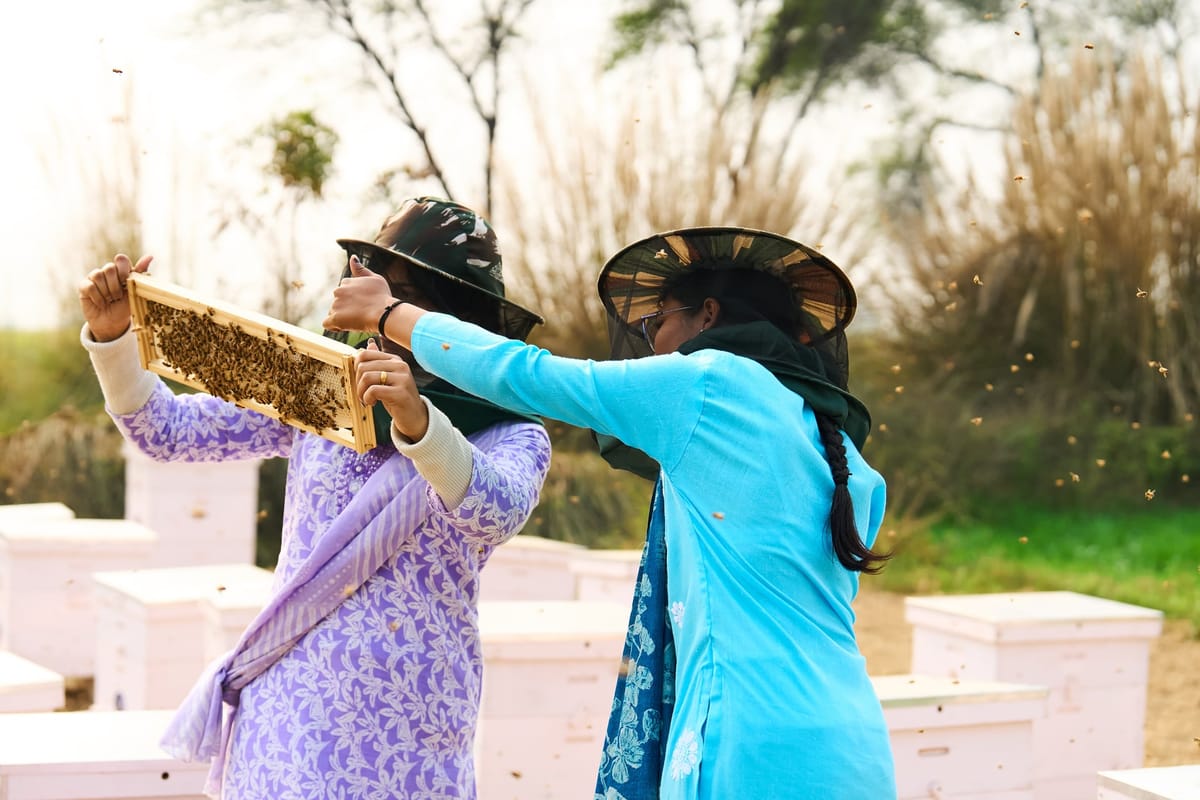
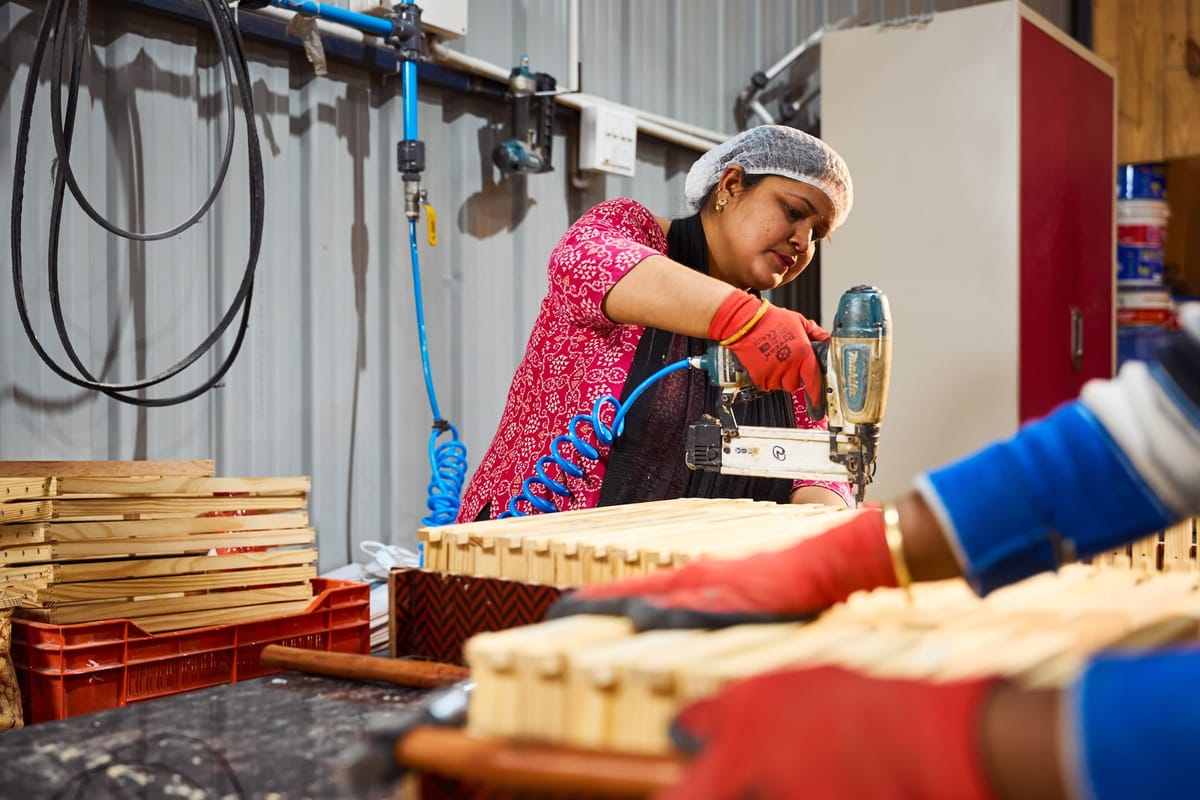
Humble Bee equips women with modern hives fitted with digital tags, allowing each hive to be tracked and monitored so issues can be spotted early and productivity improved. Training is delivered through an easy-to-use mobile platform called BeeKind, which offers AI-powered guidance based on local conditions. Meanwhile, on-the-ground mentors, known as BeeMitras (community beekeepers; literally “friends of the bees”), provide hands-on support, seasonal guidance and problem-solving in the field.
Importantly, Humble Bee guarantees a fair buy-back for honey and hive products in advance. This removes the uncertainty that often forces small producers to sell at low prices.
The model draws inspiration from India’s Amul cooperative, which transformed dairy farming through what was known as the White Revolution by removing intermediaries and ensuring milk producers shared in the value they created. Citing “father of Amul” Dr. Verghese Kurien as her role model, Monika sees Humble Bee as applying that same principle to beekeeping. She describes it as her contribution to a “new Golden Revolution,” referencing a period of rapid horticultural growth during which India used innovation to restore biodiversity, strengthen harvests and unlock livelihoods.
“By embedding pollinators into the heart of agriculture, we are rewriting the rural economy, addressing a critical set of interconnected challenges at the intersection of opportunity, climate resilience and sustainable agriculture.”
Boosting harvests, lifting livelihoods and catalyzing regenerative farming
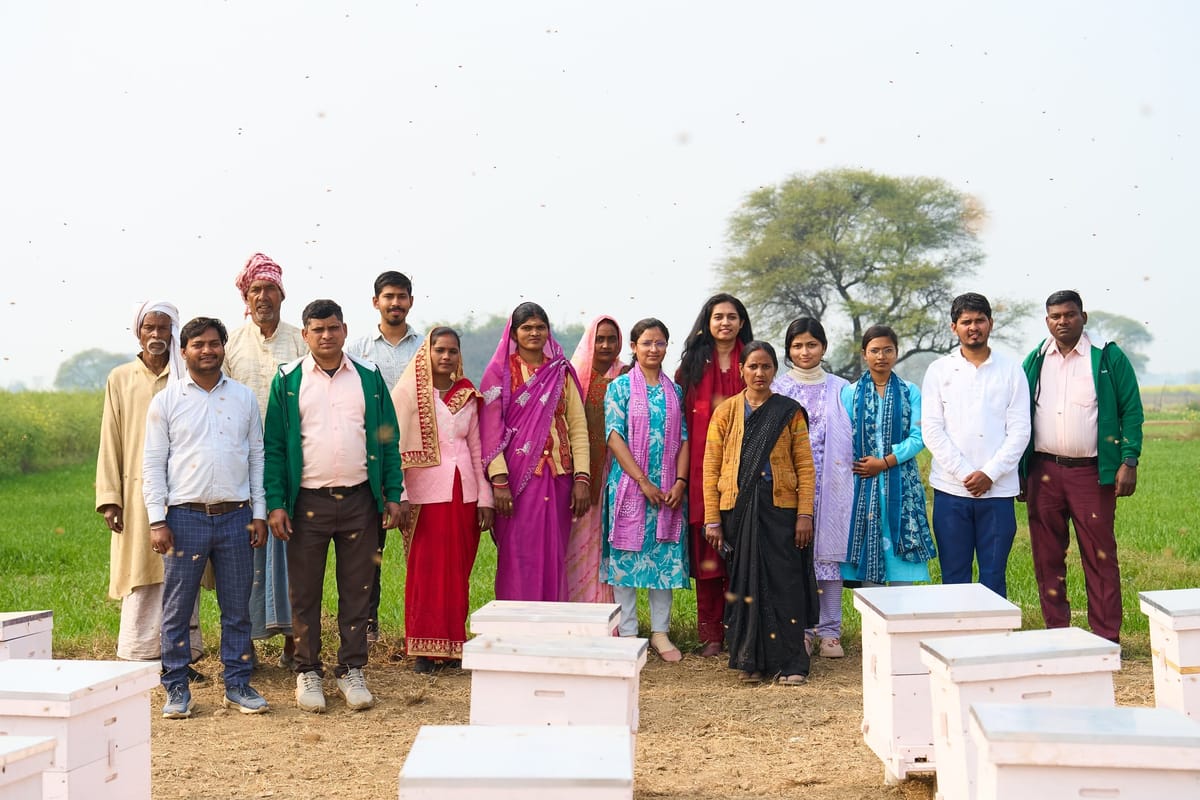
That Golden Revolution is already in evidence. Humble Bee has trained more than 2,000 women beekeepers, with participants currently earning an average additional $500 USD per year.
Central to Humble Bee’s impact is its migratory beekeeping model, which aligns clusters of hives with flowering seasons across regions, enabling four to six honey harvests a year, rather than one or two. “Beekeeping was always treated as a side income,” Monika explains. “We’re changing that by making it dependable and year-round.”
Monika notes that women are gifted beekeepers: “They handle the bees very gently, meaning they don’t get stung. Bees also respond well to female voice frequencies.”
Meanwhile, pilot regions report 10–20% increases in crop yields, driven by improved pollination. Encouragingly, as yields rise, farmers are reducing pesticide use to protect bees, reinforcing regenerative farming practices.
Humble Bee is scaling steadily across India through collaborations with the Bill & Melinda Gates Foundation, YuWaah, a UNICEF initiative focused on youth skills and employment in India, and WWF-India, the Indian arm of the World Wide Fund for Nature. The company also works with state rural livelihood missions and with the Ministries of Agriculture and Rural Development on joint initiatives.
Monika’s ambition is long-term: “This is not a sprint. We’re building a movement that will eventually empower a million women beekeepers and reshape how agriculture values pollination.”
“Nothing succeeds like success. For every one of our successful beekeepers, an entire community of women will follow suit. We are creating role models.”
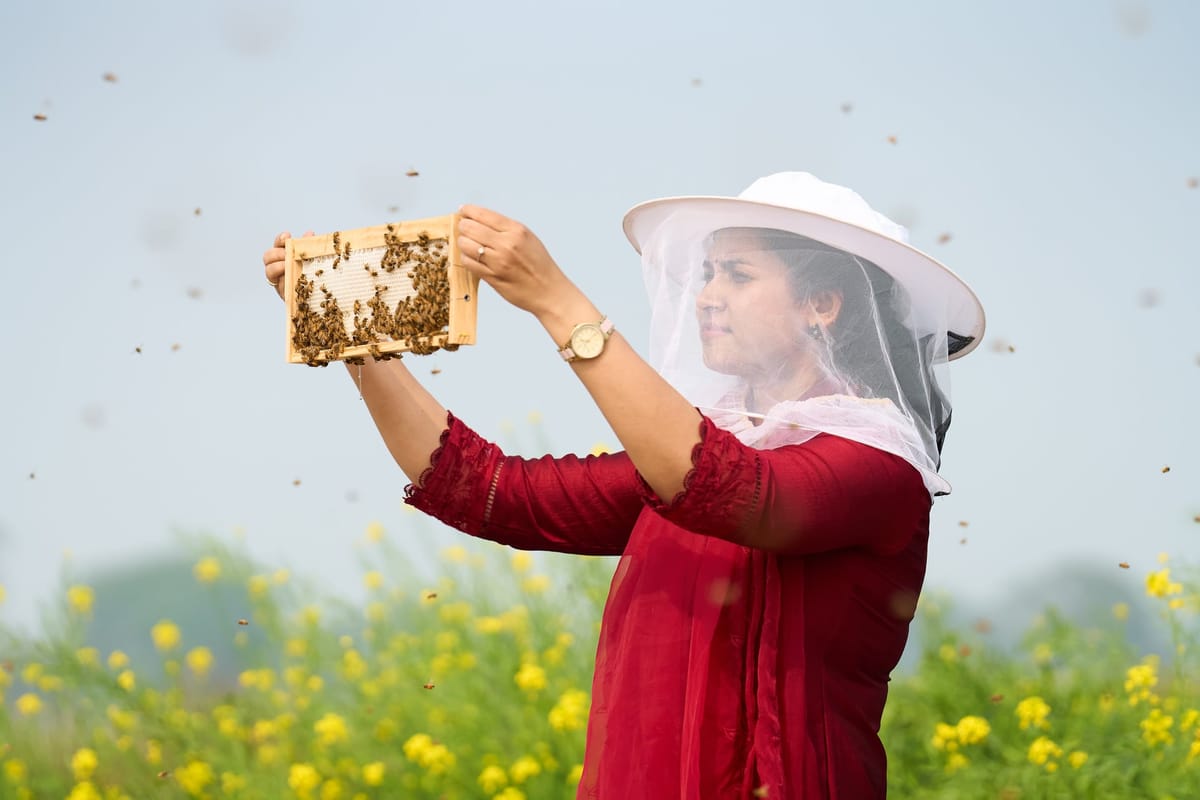
PHOTO GALLERY