
Community Stories
Women entrepreneurs lighting the path
How role models make entrepreneurship feel within reach
“What I’m most proud of is seeing a woman arrive shy and unsure, then within a year stand tall with confidence. When she finds her voice and starts shaping her own future, and you see that change in how she carries herself and how the world responds to her — that’s everything.”
The spark that lights the fire
Role models play a crucial role in helping women to see themselves as entrepreneurs, building their confidence in their potential and their courage to take the leap. 2026 fellow Susan Namirimu’s venture Mtindo showcases this beautifully, with role modeling embedded into its business model.
Based in Uganda, Mtindo creates local jobs for women through a twin model: Mtindo Academy equips unemployed young women with practical tailoring skills, while Mtindo Studio provides paid work producing garments for local and international brands, ensuring the women’s newly acquired skills translate directly into income. The women Mtindo trains come from vulnerable backgrounds — most are young mothers and early school leavers who had little hope of improving or supporting their lives. These trainees generally have no previous employment experience, so Mtindo provides additional training alongside the technical skills needed for garment production, including numeracy, literacy and confidence-building. Each year, 40 of these young women graduate from Mtindo Academy into a brighter future, equipped with new skills and renewed self-belief. Many of them choose to follow in Susan’s footsteps and set up their own tailoring businesses.
Local success stories can resonate more than distant unicorns
Relatability — through shared characteristics or experience — can make a role model feel easier to connect with and help kindle the confidence that entrepreneurship is within reach.
Celebrating the remarkable, trailblazing women whose businesses are breaking records is important for normalizing women’s role in entrepreneurial spaces, but an aspiring woman entrepreneur may be more likely to launch her own start-up based on hearing about success on a more modest scale. For example, learning about the experience of a woman from her own region whose thriving small business provides a solid income, stability for her family and livelihood opportunities for the community could feel grounded enough in her reality that entrepreneurship feels practicable.
However, when that same woman entrepreneur’s ambition begins to develop — and her business with it — she needs to see proof that her dreams of growth are possible. At this point, stories of the many bold, successful women founders who have built impactful and scalable enterprises begin to resonate more deeply.

Susan Namirimu, 2026 fellow
The confidence to overcome cultural challenges
In many cultural contexts, women's entrepreneurship requires navigating patriarchal family expectations, community skepticism, or religious norms. A local role model who has navigated that same system provides a roadmap that an outsider simply cannot, and a strong one can demonstrate that aspiration and cultural belonging are not mutually exclusive.
Relatability is further tied to representation. Class and sector matter as much as geography. A wealthy urban woman in Berlin may not be an effective role model for a rural entrepreneur in Germany’s eastern municipalities, despite living in the same country. Similarly, a woman founder in consumer products may not be a strong role model for women in high technology.
“By opening doors, collaborating and modeling diverse definitions of success, women entrepreneurs not only inspire the next generation — they also expand what entrepreneurship looks like.”
Identification, not inspiration
Role models work through identification, not just inspiration. The more dimensions of shared experience — geography, culture, class, sector, family structure — the stronger the identification.
Global Entrepreneurship Monitor (GEM) produces a yearly Women’s Entrepreneurship Report. It includes perceptual data that maps where these identification gaps are most acute and where targeted role model visibility efforts would therefore be most impactful.
Across countries, women consistently underestimate their own entrepreneurial capabilities relative to men. These gaps in perception are exacerbated in contexts where women are less connected to other entrepreneurs.
“Seeing a woman who looks like you, speaks your language and shares your constraints succeed directly counters self-doubt and boosts opportunity recognition in a way that distant, high-profile success stories cannot.”
Social media democratizes exposure, not outcomes
Social media can meaningfully democratize access to entrepreneurship role models for women, especially in regions where local examples are scarce. This includes countries like Poland and Egypt, where GEM found the lowest rates of women’s total early-stage entrepreneurial activity out of the 51 countries examined at 2.3% and 2.6% respectively, and China, Hungary and Romania, which also reported sub-5% rates.
However, it works best when visibility is paired with practical access and supportive ecosystems. The results from GEM’s Adult Population Survey and National Expert Survey combined provide concrete guidance for policymakers wishing to adapt ecosystems to encourage women’s entrepreneurship on multiple levels.
Social media can be truly empowering for women when combined with practical resources (such as training, tax incentives, and funding programs) and access to peer communities with the possibility of mentorship and partnerships.
Social media normalizes women as investable leaders, but access gaps remain
Social media has genuinely disrupted the male visibility monopoly that once controlled whose success stories got told. However, access and impact are not the same thing.
GEM research shows that securing finance remains one of the top three hurdles women entrepreneurs must overcome, behind difficulty achieving profitability and balancing their business with family and personal commitments. While showcasing women founders as role models can also help normalize seeing women as investable leaders, the structural gender gap remains real.
Access to social media requires smartphones, data connectivity and digital literacy — none of which are evenly distributed. Regions identified by GEM as having the lowest female entrepreneurship rates often overlap with the lowest internet penetration rates. This means that the women most in need of role model access are frequently the least able to reach them digitally. Instead, they must rely on the role models they see around them. Their stories are also under-represented in the media and on the internet.
Pairing visibility with strategy
The emphasis on role model visibility is well-founded, but visibility without strategy rarely moves the needle. The most effective showcasing approaches work across multiple levels simultaneously, including media, institutions, communities and policy, and are designed around identification and connection, not just inspiration.
The Cartier Women's Initiative aims to tackle a dual challenge for women impact entrepreneurs — visibility and access. With nine regional categories and one thematic category, our awards shine a spotlight on a diverse community of women leaders. Fellows from 67 countries have joined the community so far, and in the 2026 edition alone ranged in age from 23 to 56.
Dr. Elam explains, “The Cartier Women's Initiative’s eligibility criteria centers on financially sustainable social and environmental impact, rather than valuation. This represents a profound reframing: it brings into view the types of businesses women disproportionately build, rather than excluding them in favor of investor-backed, male-skewed unicorn ventures.”
How women entrepreneurs can light the path for others
Women entrepreneurs face pressure to present their startup stories in particular ways. Aileen Ionescu-Somers expands, “Funders and program sponsors often want success narratives. The media wants drama and resolution. Aspiring entrepreneurs want hope. And the storyteller herself often carries a complex mix of pride, residual pain, uncertainty about what's appropriate to share, and concern about how vulnerability will affect her credibility in a world that already questions women's business judgment more than men's. The stakes are particularly high for women role models because, as GEM data shows, women already underestimate their entrepreneurial capabilities relative to men.”
Dr. Elam continues, “Women entrepreneurs wanting to inspire others should be transparent about the ups and downs of their journey. They can share honest stories without discouraging others by pairing challenges with clear trajectories — showing not just what went wrong, but what they changed and what followed. Specific, grounded examples are far more empowering than vague struggles and focusing on the ‘messy middle’ of entrepreneurship makes the journey feel realistic rather than extreme. It also helps to normalize doubt without glorifying burnout, and to share practical tools, decisions or lessons alongside personal experiences. This approach keeps stories truthful while still reinforcing that progress is possible.”
Role models do far more than encourage individual women to start businesses. They help reshape who entrepreneurship is seen as being for. Every story shared and every pathway illuminated expands the possibilities others can imagine for themselves. When women entrepreneurs light the path, they do not simply inspire those who follow — they make the road itself easier to travel.
Continue reading about how women founders in science and technology are blazing trails for aspiring entrepreneurs to follow in the second part of this series of community stories.
The Cartier Women’s Initiative collaborates with Global Entrepreneurship Monitor (GEM) to generate evidence on the global state of women’s entrepreneurship, including partnering with its annual Women’s Entrepreneurship Report.
This blog has been produced in partnership with GEM. It includes insights from GEM’s Executive Director Aileen Ionescu-Somers and the GEM Women’s Entrepreneurship Report’s lead author Dr. Amanda Elam.
Read More
Insights
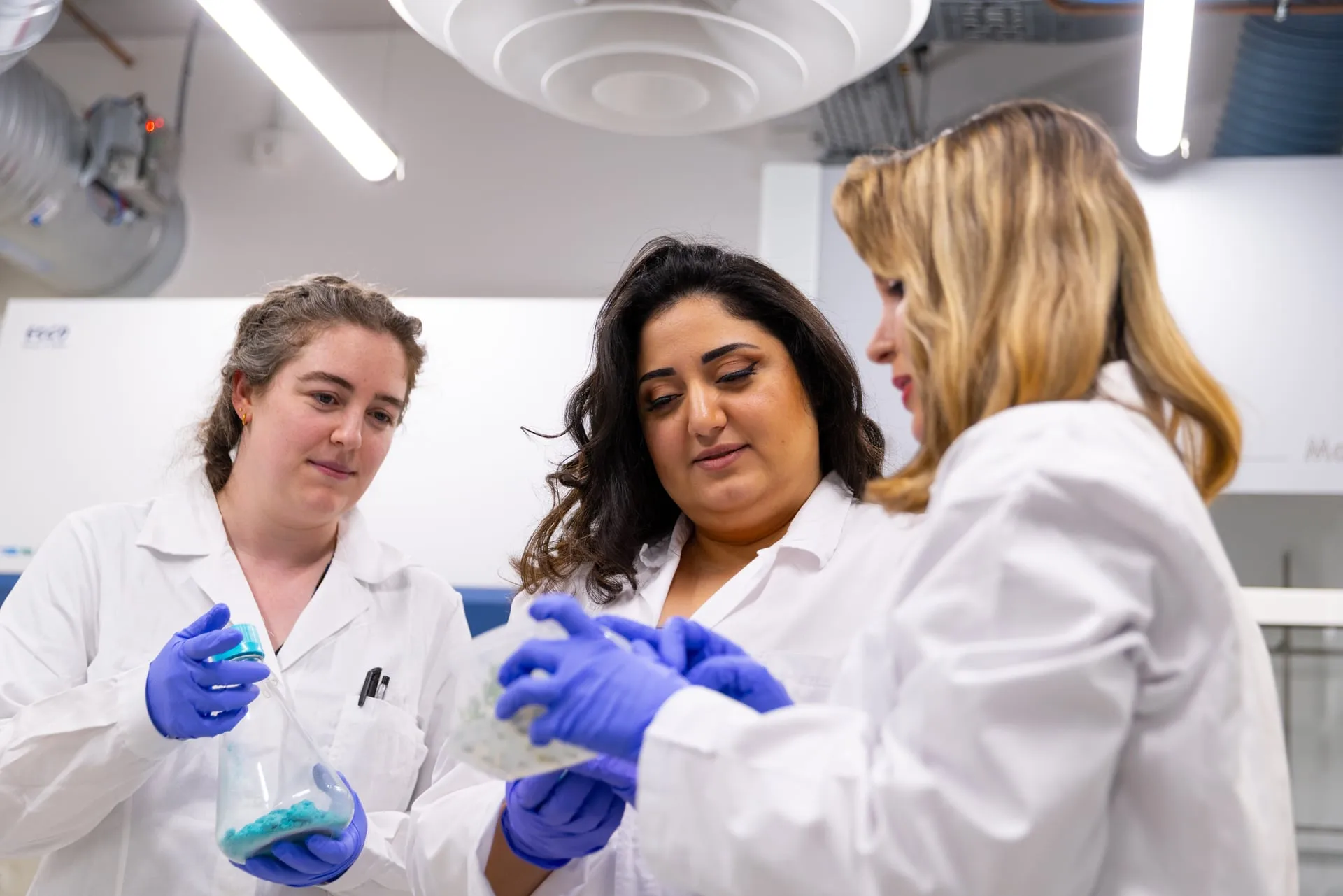
Reshaping perceptions of where women belong
Read the second part in this series about how women founders in science and technology are blazing trails for aspiring entrepreneurs to follow.
Insights
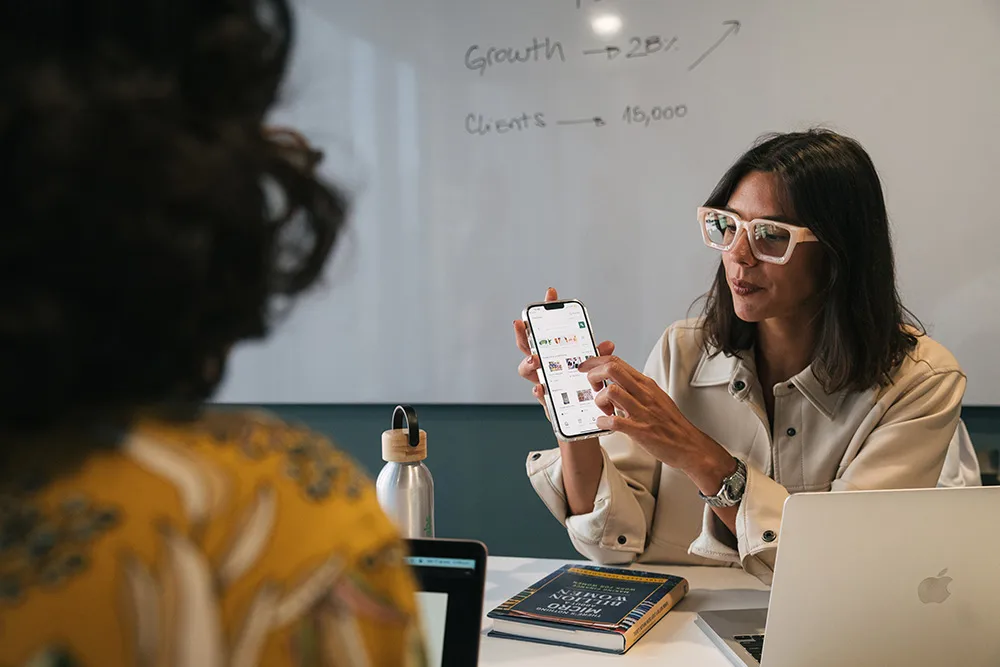
Funding the women building the future
Read our financial capital blog about how mentorship, investor networks and catalytic funding help women entrepreneurs scale their impact.
.png?&quality=80&auto=webp)
Insights
Impact entrepreneurship: where purpose powers profit
Read another of our community stories highlighting how Cartier Women's Initiative fellows are achieving both purpose and profit — and investors are taking note.