
Community Stories:
Turning insights into increased impact
How impact measurement unlocks opportunities for entrepreneurs.
“Over time, we realized that real impact goes beyond infrastructure — it’s about people.”
Many impact entrepreneurs begin with the same laser focus: every hour goes into building the business, and anything that does not feel urgent is pushed aside. In those early months, impact measurement often falls into that category, seen as a compliance chore or a task to tackle when the business is bigger.
Yet, as many Cartier Women’s Initiative fellows discover, the moment they begin tracking the change they create — even with the simplest metrics — something shifts. Their intentions sharpen, their teams align and their decision-making gains new clarity.
Why impact measurement matters
An impact entrepreneur's role is to define an impact vision, then align and mobilize stakeholders around that vision. Embedded impact measurement is an invaluable tool to achieve this alignment and mobilization. Alongside clarifying for your employees and supporters exactly what specific goals you are working towards, seeing the numbers move in the right direction is a powerful motivator.
Impact measurement is one of the core topics of our entrepreneurship program and one of the top-cited improvement areas that fellows identify when they complete their end-of-fellowship survey. It can be a key differentiator, communicating competitive advantage to your customers, partners and investors, and proving the positive difference your business makes in the world.

2023 fellow Ania Wysocka
Impact measurement principles in practice
Across our community, founders are reaping the benefits of improved impact measurement.
See 2023 fellow Ania Wysocka, who developed the mobile application Rootd as an interactive, on-demand tool to manage anxiety and panic attacks. As well as helping her team tailor Rootd to better serve its users, impact measurement has primed the business for partnership opportunities.
“Since founding Rootd, our impact measurement approach has evolved from focusing primarily on user growth and engagement to tracking clinically relevant outcomes and equity in access. Early on, we measured success through app downloads, session counts and ratings,” notes Ania.
She expands, “Over time, we began incorporating validated mental health assessments, user-reported mood improvements and qualitative feedback to better understand actual health outcomes. This has allowed us to align more closely with healthcare standards and better inform partnerships.”
Rebecca Percasky, 2021 fellow and founder of environmentally friendly packaging supplier Better Packaging Co., has also developed her impact measurement approach over time, including creating impact dashboards for each customer that encourage retention.
Rebecca reflects, “When we founded Better Packaging Co., our impact measurement was relatively simple and focused on easily quantifiable metrics like the number of compostable mailers sold. However, as our business and our impact ambitions grew, we realized that true impact goes far beyond product substitution.
“We now measure impact more holistically, tracking and measuring the tons of ocean-bound plastic collected and the carbon dioxide emissions avoided. The next step is to track the social impact of who is collecting it, under what conditions, and how it affects their livelihoods and communities. We’ve implemented third-party certifications like Ocean Bound Plastic and Global Recycled Standard across our whole supply chain to ensure traceability and ethical compliance. Our digital systems now include QR code-enabled traceability and impact dashboards that allow our customers to see the verified environmental impact of their packaging.”

2021 fellow Rebecca Percasky
Establishing a foundation
Behind every strong impact measurement approach is a clear logic — and that begins with a theory of change. Theory of change is a structured roadmap linking business’ activities to the outcomes and impact it aims to create, step by step.
In 2024, we asked all Cartier Women’s Initiative applicants to submit their theory of change. Based on 450 eligible applications, we found that 42% of applicants had a theory of change, and 27% had one detailed enough to help steer business decision-making. It is not surprising that the highest-quality applications we receive tend to include a theory of change — consistently, the majority of the fellows we select have a detailed one.
Very early on, an impact business must be clear on how it aims to create impact and how it will track the results of its impact model. A theory of change is an excellent starting point to articulate this.
We advise working backwards from your impact vision and answering the following questions, in order. Firstly, what impact does your business work towards? Next, what specific changes in the world would enable this impact? Then, what business results can contribute to driving these necessary changes? Finally, how will your business deliver these desired results — with what activities and resources?
Rana Sanyal, the 2021 fellow who built smart nanomedicines company RS Research, developed a theory of change for the first time during her fellowship year.
She explains, “While we are preparing for our upcoming Series B funding round, we can feel the strong influence by the Cartier Women’s Initiative Program on our impact measurement approach. It has helped us go beyond ‘it's an innovative solution for patients in need’ to patient population analysis, ecosystem contributions, collaborations and inspiration through public speaking opportunities.”
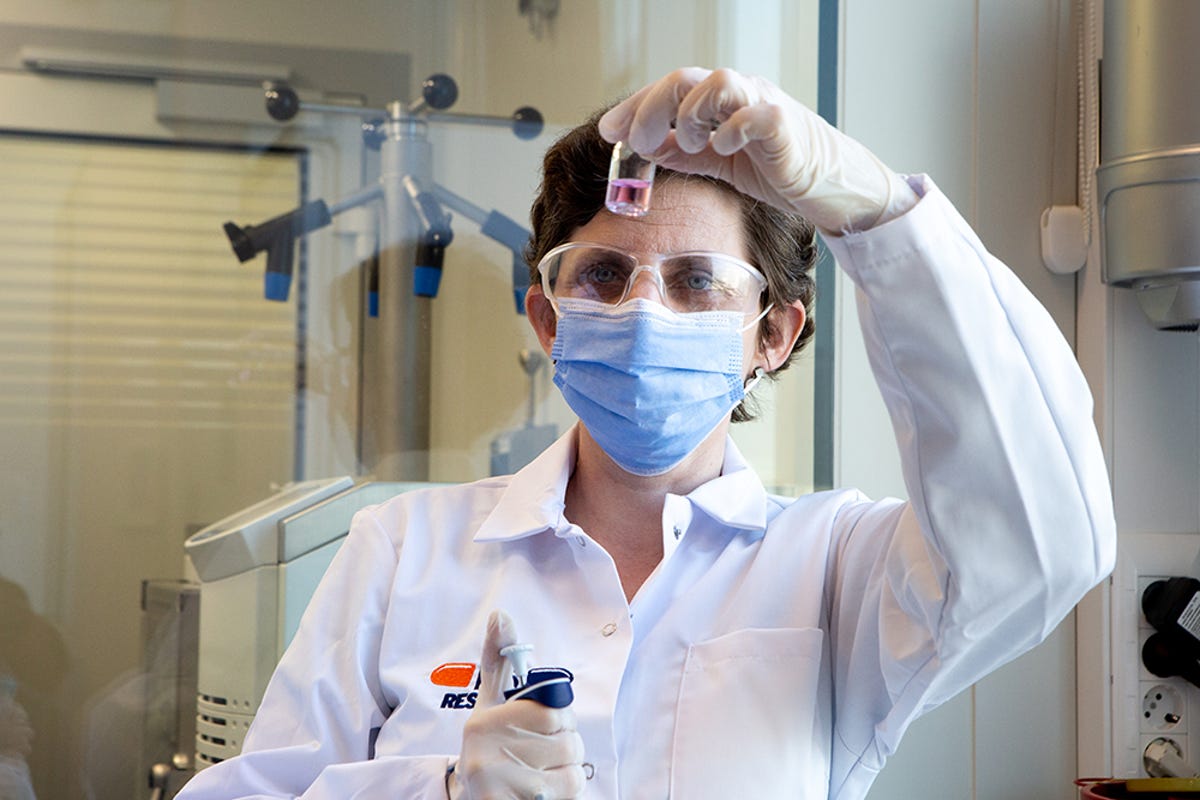
2021 fellow Rana Sanyal
Metric selection
Once your theory of change has clarified the underlying logic of your impact creation, use it to prioritize a small set of key metrics that help track your progress.
Out of the 450 eligible applicants in 2024, only 28% submitted three valid, relevant impact metrics. This shows room for improvement in how impact is measured among early-stage impact entrepreneurs.
When selecting metrics, common frameworks help ensure you are speaking a common language. For example, the United Nations Sustainable Development Goals (SDGs) represent a global consensus of how we can build a better future for people and the planet. Linking your metrics to the SDGs therefore anchors your impact story in a recognized global framework, allowing you to track progress toward specific goals while positioning your business within a wider worldwide movement.
The majority of the valid metrics our applicants submit are IRIS+-aligned. The IRIS+ Catalog of Metrics was born from an endeavor by the Global Impact Investing Network (GIIN) to support impact investors. It compiles a broad range of qualitative and quantitative performance metrics and is a great starting point for impact entrepreneurs looking to measure, manage and optimize their impact.

2024 fellow Kyla Bolden
Metric evolution
As impact businesses grow, their metrics tend to develop along with them.
It is likely that your small set of starter metrics will focus on business activities and results (or outputs) rather than outcomes; this lays a foundation of embedded impact measurement. Per our 2024 applicant data, 57% of metrics with data provided were linked to business activities and 28% reflected business outputs, since outcomes data is more difficult to collect. However, we see that even businesses that start with activity metrics tend to eventually dig deeper as their teams grow curious about what results are achieved and how, chase improvement and explore what broader changes the business results contribute to.
2024 fellow Kyla Bolden’s experience supports this observation. Kyla created her edtech company, Wiz Learning, to make learning science, technology, engineering and mathematics (STEM), artificial intelligence (AI) and coding more accessible.
She notes, “When we first started, our impact measurement focused mostly on immediate student feedback — how much they enjoyed the class, what they learned and how confident they felt. But as we’ve grown, […] we’ve started prioritizing metrics that reflect long-term benefits to students like career readiness, increased exposure to STEM fields or improved digital literacy. We still collect stories and qualitative feedback, but now we’re pairing that with a bigger-picture view of impact over time.”
Ishani Roy of Serein is a 2023 fellow providing unconscious bias training, leadership development and culture transformation. Her impact measurement experience bears similarities to Kyla’s.
“Our approach to measuring the impact of interventions has evolved to capture nuanced, actionable insights into cultural transformation,” Ishani describes.
“Initially, we focused on broad adoption metrics like the number of learning management system (LMS) users, people trained, topics covered, countries and companies. While these reflected reach, they offered limited understanding of how interventions shifted behavior.
“Today, our impact measurement is designed to reveal the depth and effectiveness of our interventions. We measure cases reported, which serve as indicators of increased awareness and psychological safety. We also track LMS engagement and completion patterns, which reveal not just exposure but sustained learning behavior.
“In addition, we follow the number of leaders trained [...] and culture impact indicators. This measures shifts in belonging, inclusion and safety post-intervention, providing insight into the tangible changes our programs drive in employee experience, collaboration and engagement. By focusing on these nuanced, behavior-linked metrics, we move beyond surface-level activity to understand how our interventions shape mindsets, influence behavior and transform organizational culture.”

2023 fellow Ishani Roy
How impact measurement informs strategy
Over time, impact entrepreneurs often find that their understanding of the change they want to create evolves. As they gather impact data, navigate day-to-day operations and listen to stakeholders, their ambition becomes more defined — and their theory of change and measurement approach must evolve to match it.
Salma Bougarrani’s journey exemplifies this. Salma is a 2024 fellow and the founder of GREEN WATECH, which provides an affordable and low-tech wastewater filtration system.
She recounts, “When we started GREEN WATECH, we mainly measured our impact by the number of plants built and the volume of water treated. Over time, we realized that real impact goes beyond infrastructure — it’s about people.
“Today, we focus on how our solutions improve farmers’ lives: better yields, water security and healthier communities. We also listen more, collecting stories, feedback and data from the field. We’re now aligning with the SDGs and exploring affordable ways to track carbon savings and water reuse at scale. Our goal is to make impact visible, not just measurable.”
2023 fellow Mariam Torosyan, founder of gender-based violence support app Safe YOU, reports a similar experience. She says, “Over time, our impact measurement has evolved to capture deeper, systemic change: how many women accessed services they wouldn’t have otherwise, how partnerships improved institutional response, and how community engagement shifted attitudes around violence. Today, we blend quantitative data with qualitative stories to reflect both reach and transformation.”

2023 fellow Yvette Ishimwe
Innovating impact measurement
As strategies evolve, so do the tools founders use to measure impact — and new technologies and creative approaches are making impact measurement more accessible than ever. Many women in our community have found innovative ways of streamlining their measurement processes to reduce its time burden.
2023 fellow Yvette Ishimwe is one of them. Her business, IRIBA Water Group, provides low-income communities across Africa with safe, affordable water access via its “water ATMs”.
According to Yvette, “Since founding IRIBA Water Group, our impact measurement approach has become more structured and data-driven. Initially, our focus was primarily on outputs, such as the number of water ATMs deployed or households reached. Over time, we developed a full impact framework, with clear indicators aligned to health, education, environmental and economic outcomes. We now consistently collect data at both the community and institutional level, including school absenteeism rates, waterborne disease incidence and carbon dioxide emissions reduced through avoided wood fuel use.
“This data is regularly analyzed to inform decision-making, improve service delivery and validate the effectiveness of our interventions. More recently, we have begun integrating digital tools that allow us to track usage and performance of our water ATMs in real time, further strengthening the accuracy and timeliness of our data.”
Other fellows are using AI to increase impact measurement efficiency. 2021 fellow Corina Huang’s “candyceuticals” business, Boncha Bio, leverages AI combined with systematic data capture on product sales to extrapolate key performance indicators, ranging from number of customers served to pill-free nutrition delivered, generating what she describes as “a clear, credible and constantly improving view of our social impact on everyday health.”

2021 fellow Corina Huang
Start early, start small — just start
Even the most experienced impact entrepreneurs continue to refine their approach. Today, only a fraction of our fellows publish regular impact reports, yet the stories shared in this article make one point clear: measuring impact is not an administrative task. It is a strategic tool that strengthens your business, deepens your credibility, energizes your stakeholders, and helps you demonstrate the change you are working to create.
Impact measurement may grow with your business, but its value begins on day one — the most important step is the first one. Establish simple measurement practices early, build them into the rhythm of your business, and expand them as your ambition and resources grow. Start early, start small — and let your impact data illuminate the path ahead.
See Asan, Gravity Wave, Linus, Mums Matter Psychology, Pantys, Seep and Teach Well for examples of impact reporting by Cartier Women’s Initiative fellows.
Read More

Insights
Creating the change we want to see
Read another of our community stories about how investing in women delivers returns that matter.
.png?&quality=80&auto=webp)
Insights
Impact entrepreneurship: where purpose powers profit
From finance to healthcare, education to climate, Cartier Women’s Initiative fellows illustrate how women impact entrepreneurs are achieving both purpose and profit — and investors are taking note. Learn more in this community story.

Insights
Pausing with purpose
Read another of our community stories about how two community-led retreats proved the power of disconnecting.